Utility line extensions & commercial power capacity upgrades.
Optimum Energy Services coordinates commercial utility line extensions, transformer upgrades, and electrical service capacity upgrades up to 5,000 amps. We handle the contractor side so your project stays on schedule while the utility handles theirs.
Capacity constraints stall expansion. We eliminate coordination gaps between contractor and utility so your project moves forward predictably.
Commercial projects only. We do not perform residential service upgrades.
- Utility-coordinated
- SCE / LADWP / PG&E
- California statewide
- National program support
- Commercial-only
- No residential
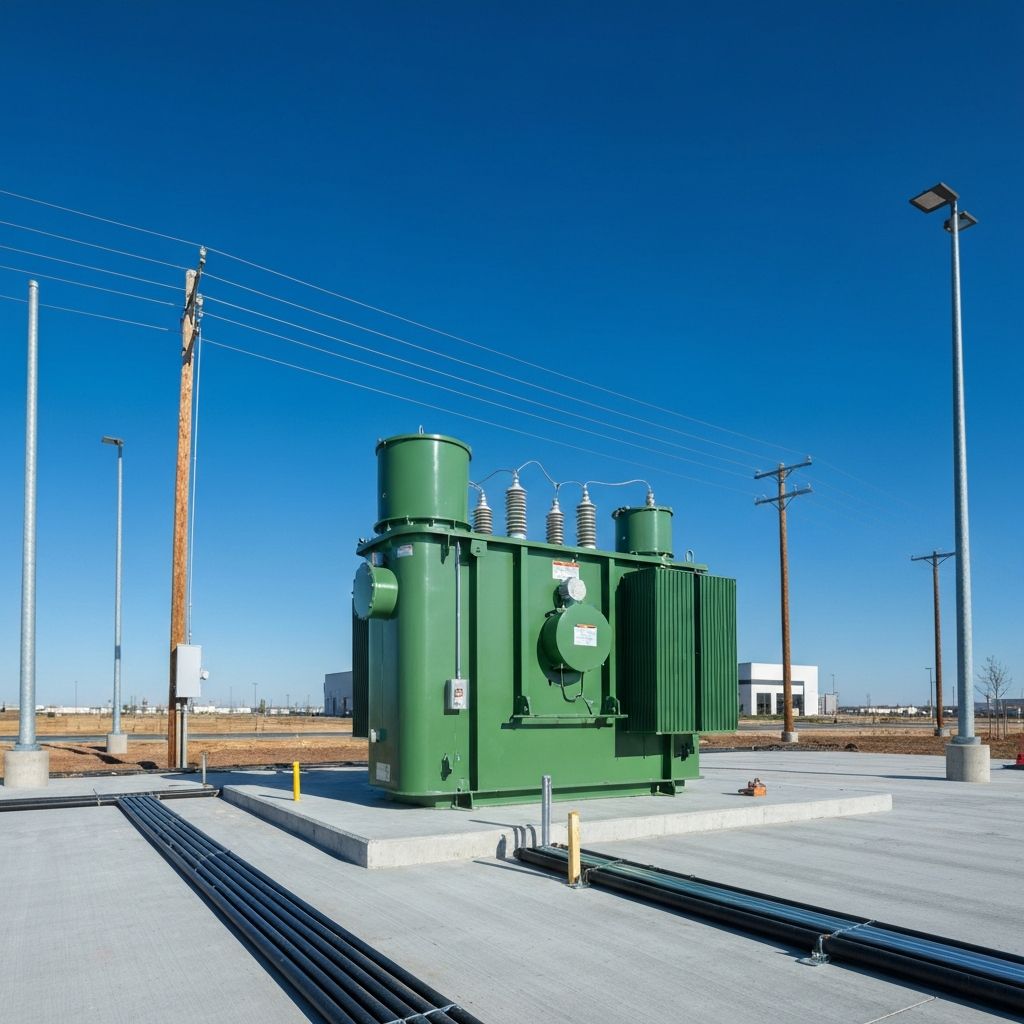
Utility coordination, transformer upgrades, and commercial power capacity delivered with clean execution.
What is a commercial utility line extension?
A utility line extension is the process of extending or upgrading electrical service from the utility network to a commercial property. This typically involves new primary conductors, a transformer installation or upgrade, and connection to your site's distribution equipment.
A commercial power upgrade increases the electrical capacity of an existing service, often requiring a transformer upgrade, new switchgear, and updated metering. Both involve coordinating between the utility provider and a licensed electrical contractor.
OES handles the contractor side of commercial electrical service upgrades: load analysis, utility application preparation, engineering, permits, and all site-side construction. The utility handles their infrastructure. We coordinate both sides so your project advances predictably.
When do you need a utility line extension or capacity upgrade?
These are the most common triggers for commercial power upgrades. If any apply to your site, an electrical capacity assessment is the logical first step.
Building expansion or new construction requiring additional electrical capacity
EV charging infrastructure that exceeds existing service capacity
New tenant load requirements beyond current panel or transformer limits
Heavy equipment installation (HVAC, compressors, manufacturing lines)
Transformer at or near rated capacity with no room for growth
Utility-mandated upgrades due to aging infrastructure or code changes
How utility line extensions and power upgrades work.
A clear process from assessment through energization. Utility timelines vary, but the contractor-side scope stays predictable.
- 1
Step 1
Load analysis & capacity assessment
We evaluate existing service, current demand, and projected loads to determine whether a line extension, transformer upgrade, or service increase is required.
- 2
Step 2
Utility application & coordination
We prepare and submit utility service requests, coordinate with the utility provider on scope and design requirements, and track application progress. Note: utility review and approval timelines vary by provider and project complexity.
- 3
Step 3
Engineering, permitting & AHJ coordination
We manage engineering submittals, city or county permits, and authority-having-jurisdiction (AHJ) coordination so nothing stalls between utility and construction.
- 4
Step 4
Contractor-side construction
We install service conductors, metering equipment, switchgear tie-ins, trenching, conduit, and any site-side infrastructure required before the utility connects.
- 5
Step 5
Utility tie-in, testing & energization
We coordinate the final utility connection, verify metering, test circuits, and complete inspection-ready documentation for energization.
What you can expect
- Clear load analysis and capacity recommendation
- Utility coordination managed on your behalf
- Inspection-ready execution and closeout documentation
What breaks these projects (and how we prevent it).
Utility line extensions involve multiple stakeholders and long timelines. These are the failure modes we see most often on commercial power upgrades.
Utility coordination gaps cause weeks of dead time between milestones.
OES tracks every utility milestone and bridges contractor-side readiness with utility-side timelines proactively.
Scope changes after utility design approval restart the review cycle.
We lock scope early through thorough load analysis and engineering review before the utility application is submitted.
Permit and AHJ delays stall construction while approvals sit in queue.
OES manages parallel permit tracks and coordinates directly with AHJs to prevent sequential bottlenecks.
Civil and trenching surprises from unknown underground conditions.
We conduct site assessments and utility locates before breaking ground, with contingency planning built into the scope.
Transformer availability and long lead times delay energization.
We flag transformer procurement early in the planning phase and coordinate with the utility on inventory and lead time expectations.
Documentation and inspection gaps cause failed final inspections.
Every OES project includes inspection-ready documentation, as-builts, and closeout packages prepared throughout construction.
What OES handles vs. what the utility handles.
Clear responsibility lines help commercial projects stay on track and avoid coordination gaps.
- Load analysis and capacity planning
- Utility service application preparation and tracking
- Engineering and permit submittals
- Service conductor installation
- Metering equipment and CT cabinet installation
- Switchgear and distribution tie-ins
- Trenching, conduit, and site civil work
- Concrete pad and transformer pad preparation
- Inspection coordination and closeout documentation
- Utility-side transformer installation or upgrade
- Primary conductor installation from the utility network
- Meter installation and programming
- Utility-side engineering review and design approval
- Final utility-side energization
Typical scope of a commercial power upgrade.
Every project is different, but these are the core contractor-side scope items for most utility line extensions and commercial service upgrades up to 5,000 amps.
Service conductors & feeders
Properly sized conductors from the utility demarcation point to your main distribution equipment.
Transformer upgrade coordination
Coordination with the utility for transformer replacement or pad-mount installation to meet increased capacity demands.
Metering & CT cabinet installation
Current transformer cabinets, meter bases, and metering equipment set to utility and code requirements.
Switchgear & distribution tie-ins
Safe connection to new or existing switchgear with proper sequencing, labeling, and inspection-ready terminations.
Trenching & underground conduit
Underground conduit runs, pull boxes, and backfill/restoration for service laterals and site power distribution.
Concrete pads & equipment setting
Transformer pads, equipment pads, and structural support for utility and customer-side equipment.
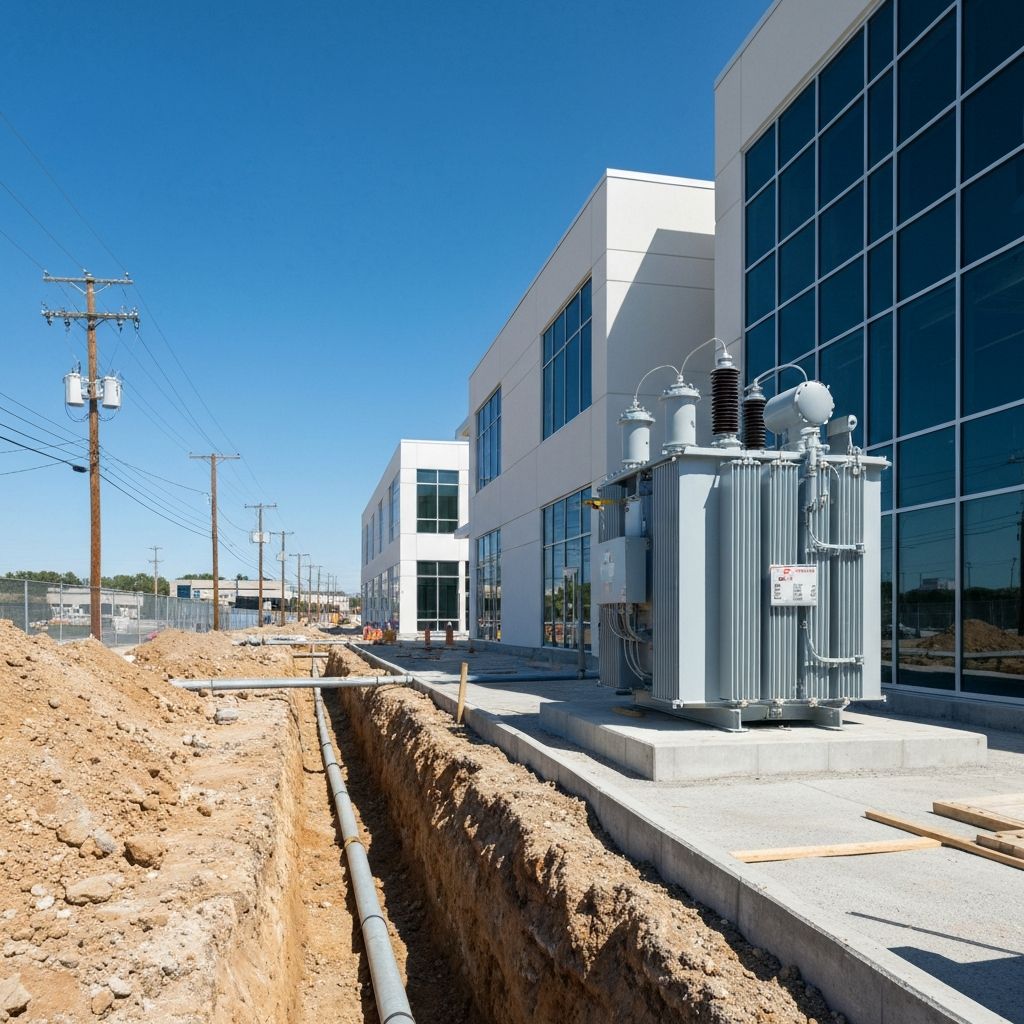
Capacity expansion built for commercial operations.
Whether your site needs a new transformer pad, upgraded service conductors, or a full utility line extension, OES manages the contractor-side scope from utility coordination through site-side construction readiness.
We work with property managers, general contractors, and facilities teams to ensure that underground conduit, switchgear tie-ins, and metering are coordinated with the utility before construction begins.
What affects your project timeline.
Utility timelines are outside contractor control, but these factors influence how quickly your project moves from application to energization.
What speeds things up
- Early utility application submission
- Clean engineering and permit packages
- Available utility transformer inventory
- Simple routing with minimal civil work
- Proactive AHJ coordination
What slows things down
- Utility backlog or infrastructure constraints
- Complex underground routing or long distances
- Environmental or easement requirements
- AHJ delays or plan check corrections
- Scope changes after utility design approval
Key cost drivers for commercial power upgrades.
Costs vary by project, but these are the primary factors that influence commercial utility line extension and capacity upgrade budgets.
Distance from existing utility infrastructure
Longer runs require more conduit, conductor, and civil work.
Underground vs. overhead requirements
Underground service laterals involve trenching, boring, and restoration costs.
Capacity and transformer sizing
Larger capacity upgrades may require custom transformer procurement and longer lead times.
Permitting and AHJ complexity
Jurisdictions with multi-phase permitting or environmental review add coordination effort.
Site restoration requirements
Asphalt, concrete, or landscape restoration varies by site conditions and disruption extent.
California statewide. National program support.
OES supports commercial power upgrade projects across California, with established crews and utility relationships in Ventura, Los Angeles, Orange, San Bernardino, Riverside, San Diego, and Santa Barbara counties.
For multi-site national rollouts, OES provides program management, standardized planning and documentation, utility coordination strategy, and deployment of qualified regional partners where required. This is common for fleet electrification programs, national retail portfolios, and multi-market EV charging deployments.
Our approach for out-of-state work emphasizes coordination consistency, documentation standards, and qualified partner selection so that every site meets the same quality and inspection-readiness benchmarks regardless of location.
California
Direct execution with OES crews statewide.
National programs
Program management and partner coordination for multi-site rollouts.
Industries that rely on commercial power upgrades.
We support commercial properties where electrical capacity directly impacts operations, growth, and tenant retention.
5-minute readiness check.
Before requesting a capacity review, having these items ready helps us provide a faster, more accurate assessment of your project.
- 1Current service size known
- 2Planned new loads identified
- 3Target energization window
- 4Utility territory known
- 5Site civil constraints known (underground/overhead)
- 6AHJ permitting requirements identified
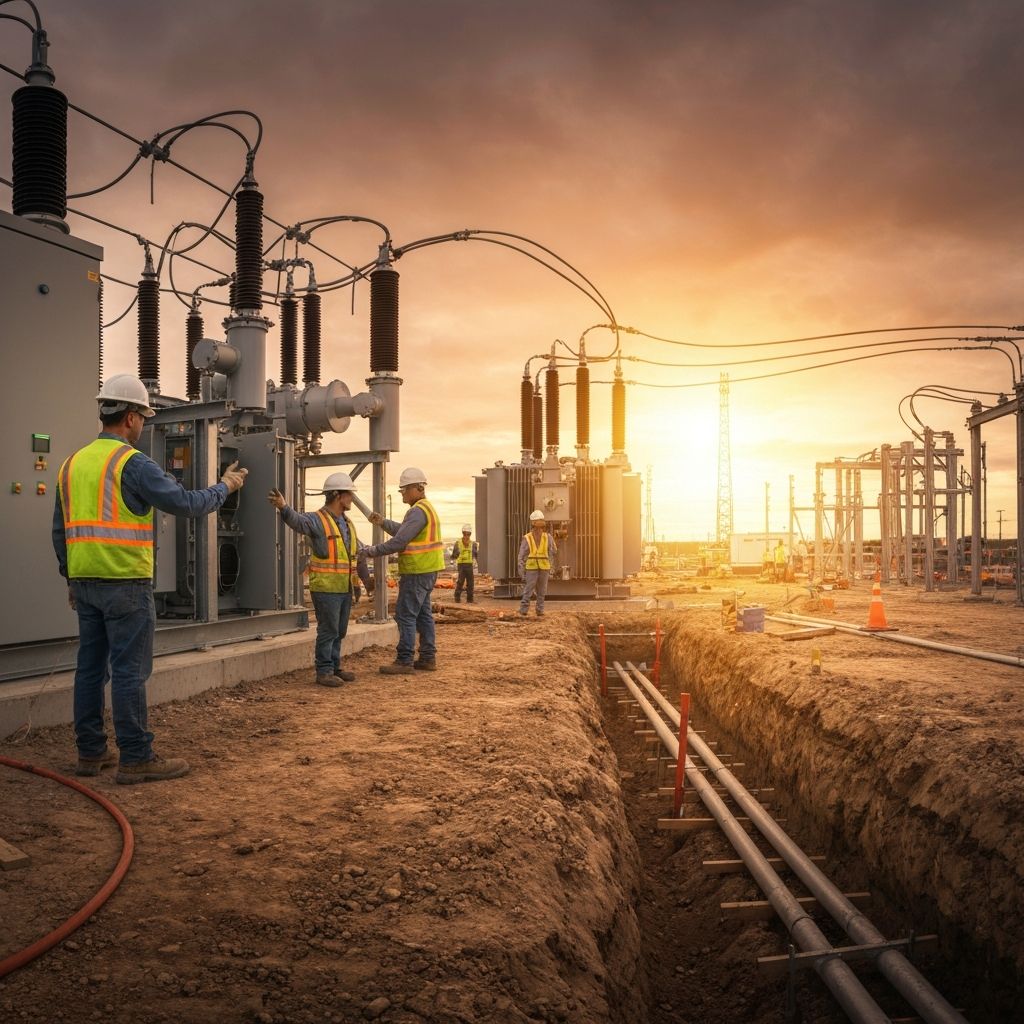
Commercial-only infrastructure, coordinated from utility to site.
From capacity planning through utility tie-in and energization, OES manages every contractor-side milestone so your commercial site is construction-ready on schedule.
Request a capacity upgrade review.
Tell us about your project and we will follow up with a practical assessment of your capacity needs, utility coordination requirements, and next steps. We handle commercial service upgrades up to 5,000 amps.
No obligation. No automated sales sequences. A project manager will reach out directly.
Commercial projects only. We do not perform residential service upgrades.
Related commercial electrical services.
Utility line extensions often coincide with these services. OES handles all of them under one contractor.
EV Charging Installation
Commercial EV charging stations that often require service capacity upgrades.
Learn moreSwitchgear Upgrades
Switchgear modernization for safer distribution and increased capacity.
Learn moreUnderground Trenching
Underground conduit runs and civil work for utility and site power distribution.
Learn moreGenerator Installation
Standby power systems that integrate with upgraded commercial service.
Learn moreUtility line extension & power upgrade FAQs.
Straightforward answers for commercial power capacity projects.
01What is a utility line extension?
A utility line extension brings new or upgraded electrical service from the utility network to your property. It typically involves extending primary conductors, installing a transformer, and connecting the service to your site’s distribution equipment. The utility handles their side; we handle the contractor-side construction.
02How long does a commercial power upgrade take?
Timelines vary significantly depending on the utility provider, application backlog, scope of work, and permitting requirements. The contractor-side work (our scope) is generally predictable once permits are issued. Utility-side timelines are outside our control but we track and coordinate throughout.
03Who pays for the utility-side work?
Cost responsibility depends on the utility provider’s tariff rules. In many cases, the customer pays for some or all of the utility-side work (transformer, primary extension). We help you understand the split during the planning phase and can assist with utility cost estimates where possible.
04Can you coordinate with SCE, LADWP, and PG&E?
Yes. We regularly coordinate utility line extensions and service upgrades with Southern California Edison, LADWP, PG&E, and other regional utility providers. Each has different processes and timelines, and we manage the contractor-side coordination for all of them.
05What if my building already has service but needs more capacity?
That is a commercial electrical service upgrade. We assess your current service, determine the additional capacity needed, and coordinate the upgrade with the utility. This may involve a transformer upgrade, switchgear replacement, or new metering equipment depending on the increase.
06Do I need a line extension for EV charging?
It depends on your existing service capacity. Some EV charging projects fit within existing capacity after a panel upgrade. Others, particularly large DC fast charging deployments, may require a transformer upgrade or full utility line extension. We assess this during the load analysis.
07Can you handle multi-site or portfolio-wide capacity upgrades?
Yes. We support property managers and multi-site operators with standardized processes for capacity assessments, utility coordination, and construction across multiple locations. This is common for fleet electrification and multi-site EV rollouts.
08What areas do you serve for utility line extensions?
We serve commercial properties throughout California, with deep experience in Ventura, Los Angeles, Orange, San Bernardino, Riverside, San Diego, and Santa Barbara counties. For multi-site national rollouts, we provide program management, standardized documentation, and coordination with qualified regional partners.
Ready to plan your commercial power upgrade?
Whether you need a utility line extension for new construction, a transformer upgrade for growing loads, or a commercial electrical service upgrade across multiple sites, OES coordinates the full contractor-side scope.